

Budapest → Bratislava → Vienna
There is nothing flat about Budapest → Bratislava → Vienna; every leg pushes the journey into a different mood. Budapest → Bratislava → Vienna spans 7 days and works best when you let each stop reveal a different side of the trip. Culturally, the journey stays rewarding because the cities never blur into one another. Budapest brings thermal baths, Danube panoramas, ruin bars, and dramatic architecture. In Bratislava, expect a walkable old town, castle views, and an easy riverside rhythm. Vienna adds imperial elegance, coffeehouse culture, classical music, and refined streets. May to June and September to October are especially rewarding, with comfortable walking weather. It works well for couples, history lovers, rail travelers, and architecture fans. Because the transfers are manageable, the route keeps its momentum without wasting too many hours in transit. Book the biggest attractions and the key transport segments in advance if you are traveling during busy weeks. What stays with most travelers is not just the landmarks but the changing texture of each day. Neighborhood walks often become as valuable as the signature sights. Small local rituals such as coffee stops, market browsing, or a late viewpoint can shape the day beautifully. That blend of famous highlights and smaller discoveries is a big reason the route feels complete. It also stays flexible enough for different budgets and travel styles. The itinerary leaves room for slower meals and unexpected favorites. Plan your Budapest → Bratislava → Vienna trip today travelers often remember the small moments most on a route like this and.
Plan this trip
Route pre-filled — set your origin, dates and budget
Photo by Steve LEDEME on Unsplash
Budapest is one of Europe's great underrated capitals — a city of imperial grandeur, thermal baths, ruin bars and extraordinary cuisine strung along both banks of the Danube. The twin cities of Buda and Pest were only united in 1873, and their distinct characters remain: hilly, castle-topped Buda on the west bank is historic and residential; flat, bustling Pest on the east is commercial, cultural and endlessly energetic. The Parliament Building, reflected in the Danube, is one of the most photographed buildings in Europe; the Chain Bridge, linking the two halves of the city, is a masterpiece of 19th-century engineering. Buda Castle and the Fisherman's Bastion offer panoramic views across the city. The Hungarian National Museum and the House of Terror — a chilling account of life under Nazi and then Soviet occupation — are essential for understanding Hungary's complex history. Budapest's thermal baths are a unique pleasure. Fed by natural hot springs, grand spa complexes like Széchenyi and Gellért are social institutions where locals soak, play chess and relax. The ruin bar scene, born in the derelict Jewish Quarter (Szimpla Kert is the most famous), has made Budapest a European nightlife destination. Hungarian food — goulash, lángos, chimney cake — is hearty and delicious.




Photo by Zuska Stozicka on Unsplash
Bratislava, Slovakia's small and charming capital, sits on the Danube at the point where Austria, Hungary and Slovakia meet — making it the only capital in the world that borders two other countries. For many years it was overshadowed by its famous neighbours Vienna (1 hour) and Budapest (2.5 hours), but the city has developed genuine character and appeal that rewards a stay of 2–3 days. The compact old town is a delight on foot: the Main Square (Hlavné námestie) with its Roland Fountain, the Primates' Palace and the Slovak National Theatre form the architectural heart. Bratislava Castle, rebuilt after a fire in 1811 left it a ruin, dominates the hill above the Danube and houses the Slovak National Museum with excellent historical collections. Michael's Gate, the only surviving medieval city gate, and the narrow lanes of the old town are best explored on an unhurried afternoon. The craft beer and coffee scene has transformed Bratislava's old town into a more lively and contemporary destination. The Slovak restaurant scene offers excellent value — generous portions of Slovak dumplings (halušky) and bryndza sheep's cheese, schnitzels, and hearty soups. Day trips to Vienna and Budapest are obvious, but the Slovak countryside — the Small Carpathian wine route, Devín Castle ruins at the Austrian border — is also excellent. Spring and summer are the best months.
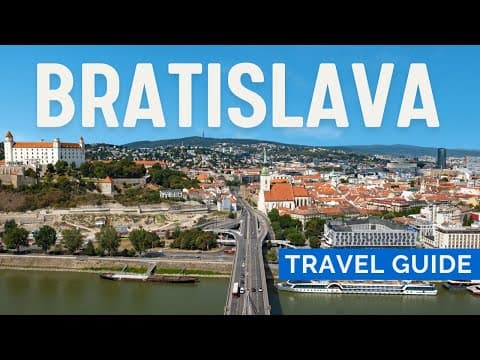

Photo by Joshi Milestoner on Unsplash