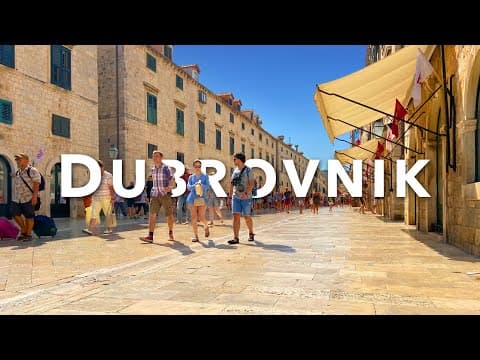

Split → Dubrovnik → Kotor
You could book Split → Dubrovnik → Kotor for the landmarks alone, yet the route succeeds because of its rhythm. Split → Dubrovnik → Kotor spans 8 days and works best when you let each stop reveal a different side of the trip. Food quietly carries the route too, because each stop gives you a different table, market, or café culture. Time in Split means a living Roman palace, waterfront cafés, and youthful Adriatic energy. Dubrovnik brings city walls, marble lanes, Adriatic views, and cinematic old town drama. In Kotor, expect a mountain backed bay, Venetian lanes, and intimate medieval appeal. Late spring and early autumn are ideal, bringing warm sea weather and easier sightseeing. This route is great for couples, food lovers, honeymooners, and travelers who want culture plus coast. Good connections are a quiet strength here, making the route easier than many equally ambitious plans. To keep the route enjoyable, avoid overloading arrival days and save some energy for evenings. Even the smaller moments tend to land well here, which is usually the sign of a genuinely strong itinerary. Small local rituals such as coffee stops, market browsing, or a late viewpoint can shape the day beautifully. That blend of famous highlights and smaller discoveries is a big reason the route feels complete. It also stays flexible enough for different budgets and travel styles. The itinerary leaves room for slower meals and unexpected favorites. Plan your Split → Dubrovnik → Kotor trip today travelers often remember the small moments most on a route like.
Plan this trip
Route pre-filled — set your origin, dates and budget
Photo by Arthur Hinton on Unsplash
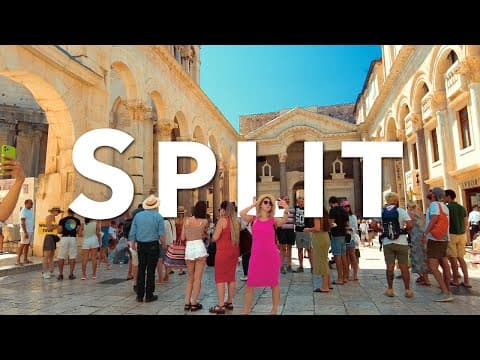
Split is Croatia's second-largest city and one of the most extraordinary urban spaces in the Mediterranean — a city where people live inside a Roman emperor's retirement palace. Diocletian's Palace, built around 300 AD as a fortified retreat, is now a Unesco World Heritage Site whose walls, towers and substructures form the skeleton of a living neighbourhood of apartments, restaurants, bars and boutiques. The palace peristyle (courtyard), the Cathedral of Saint Domnius (built into Diocletian's mausoleum — making it one of the oldest Catholic cathedrals in the world), the vestibule, the Golden Gate and the underground chambers (where locals once kept livestock and which can be explored today) are all within the palace walls. The Meštrović Gallery, in the magnificent villa of Croatia's greatest sculptor Ivan Meštrović, is one of the Adriatic's finest museums. The promenade (Riva) along the harbour is the city's social spine — morning coffee and evening strolling are rituals here. Split is increasingly excellent as a city destination in its own right, not merely as a jumping-off point for the islands. The Varoš neighbourhood behind the palace and the Meštrović quarter are the most authentic for local restaurants and bars. Ferry connections to Brač (Zlatni Rat beach), Hvar, Vis and Korčula are excellent. The Dalmatian food — peka (meat and vegetables slow-cooked under a bell), fresh fish, prošut ham, local wines — is outstanding.
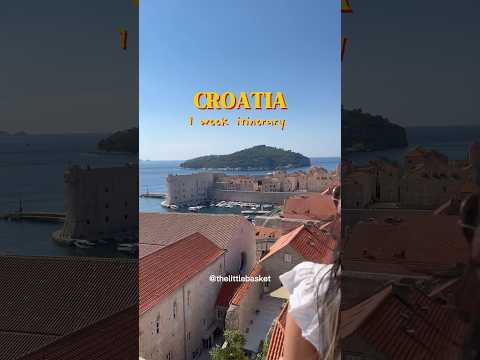


Dubrovnik is one of the most dramatically beautiful cities in the world — the "Pearl of the Adriatic," as Byron called it, a perfectly preserved medieval walled city on a limestone promontory above the impossibly blue Adriatic Sea. Its walls, towers, marble-paved streets and Renaissance architecture make it extraordinary under any circumstances; the light and setting elevate it to something almost unreasonable. Walking the 2-kilometre City Walls (a full circuit takes about 2 hours) is the defining Dubrovnik experience — views from the walls look down over terracotta rooftops to the sea on one side and the limestone Dinaric Alps on the other. The Stradun (Placa), the main street running through the old city, is flanked by Baroque palaces, churches and cafés. The Rector's Palace, Sponza Palace, Dominican Monastery with its Gothic cloister and the Franciscan Monastery (with its 14th-century pharmacy, one of Europe's oldest) are all worth entering. Game of Thrones filming (Dubrovnik was King's Landing) has significantly increased visitor numbers — cable car queues and the walls can be very crowded in July and August. The off-season (October–May) is dramatically better for experiencing the city's genuine magic. The Elafiti Islands, Lokrum (a short ferry ride) and the Pelješac Peninsula wine region (excellent Dingač and Pošip) are all excellent nearby destinations. Cable car to Mount Srđ for panoramic views is essential.