

Graz is Austria's second-largest city and one of its most liveable — a compact, elegant university city in Styria that has never quite received the international attention it deserves, meaning it remains genuinely authentic and affordable compared to Vienna and Salzburg. The well-preserved inner city, a Unesco World Heritage Site, is dominated by the Clock Tower (Uhrturm) on the Schlossberg hill above — a hill that was never destroyed despite Napoleon's troops taking the city. The Altstadt below the Schlossberg is a charming mix of Renaissance and Baroque architecture, narrow lanes and the main Hauptplatz with its fountain and arcaded courtyards. The Landhaus (Styrian parliament), the Cathedral and the Mausoleum of Emperor Ferdinand II are architectural highlights. The Kunsthaus Graz — a biomorphic blue "alien" building designed by Peter Cook in 2003 — is a striking piece of contemporary architecture housing significant exhibitions of international art. The adjacent Schlossberg (accessible by lift, funicular or stairs) offers the city's best views. The Styrian culinary tradition is distinctive and excellent: Kürbiskernöl (pumpkin seed oil, drizzled on everything), Styrian chicken, excellent local wines (particularly Schilcher rosé and Südsteiermark whites). The farmers' markets at Kaiser-Josef-Platz are outstanding. Graz hosts several excellent summer festivals. The nearby wine roads of southern Styria (the "Styrian Tuscany") are among Austria's most scenic driving routes. Visit April–October for the best weather.
Plan your trip to Graz
Destination pre-filled — set your origin, dates and budget
Travel videos — Graz
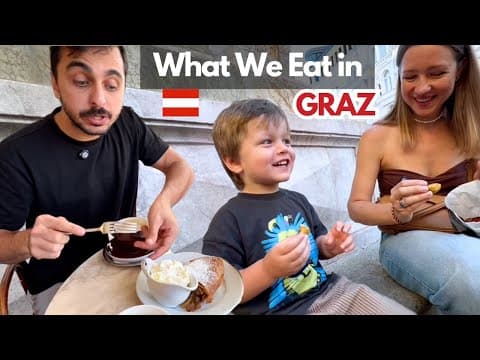
A Cozy Day in Graz 🇦🇹 | Trying Local Austrian Food

🇦🇹 Graz Christmas Markets 2024: An Underrated Holiday Gem!
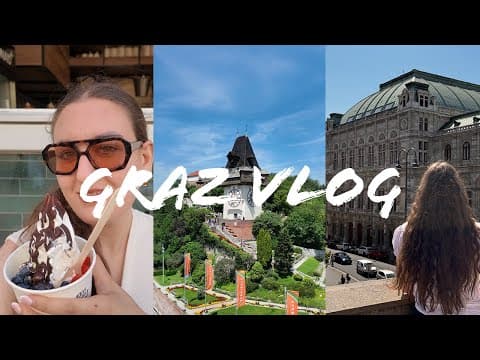
“One Day in Graz: Coffee Hopping, Cute Food & Peaceful Places to Explore

Skating in Graz, Austria - Coach Julia Travel Vlog
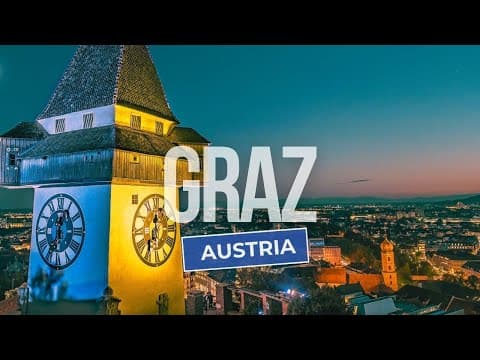
Exploring Graz, Austria | A Travel Vlog by Engineer Phyl
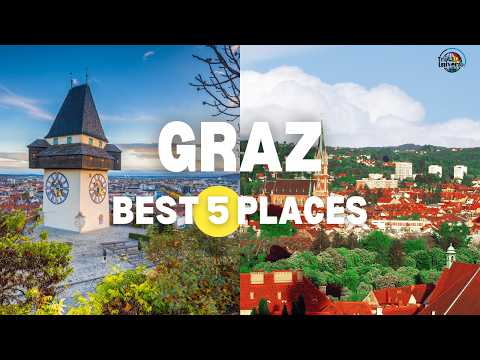
Places to Visit in Graz 🇦🇹 Travel Video