

Fuerteventura is the Canary Island that most resembles Africa — and that makes sense, as it lies just 97 kilometres from the Moroccan coast, closer to Africa than to mainland Spain. It is the oldest of the Canary Islands geologically, its volcanic peaks long since eroded to low rolling hills, which allows the Saharan wind to sweep across enormous expanses of white sand beaches and golden dunes that are among the finest in Europe. The Corralejo Natural Park in the north covers 11km of pristine dunes and beaches that appear to be a fragment of the Sahara transplanted into the Atlantic. Corralejo town is the most developed resort on the island, with excellent kitesurfing and windsurfing conditions — Fuerteventura is consistently rated among the world's top windsurfing destinations. The beaches of El Cotillo in the northwest are favoured by surfers. The southern tip peninsula of Jandía has some of the island's finest beach stretches at Morro Jable. The historic interior — Betancuria (the original island capital, deep in the valleys for protection from pirate raids), Pajara with its unusual church facade, and the Oasis Park wildlife park with botanical garden — provides cultural depth away from the beaches. The island's goat cheese (queso majorero, with a protected designation of origin) is one of Spain's finest. The consistent trade winds and the uncrowded natural parks make Fuerteventura excellent for outdoor sports. Year-round sunshine and dry climate.
Plan your trip to Fuerteventura
Destination pre-filled — set your origin, dates and budget
Travel videos — Fuerteventura

BEST Canary Island for you? - TRAVEL GUIDE | Tenerife, Lanzarote, Gran Canaria, or Fuerteventura?

COME ON HOLIDAY WITH ME to Fuerteventura ☀️🏝️🌊

Travel day vlog with kids! From Birmingham to Fuerteventura ✈️✨ #familyholiday #fuerteventura
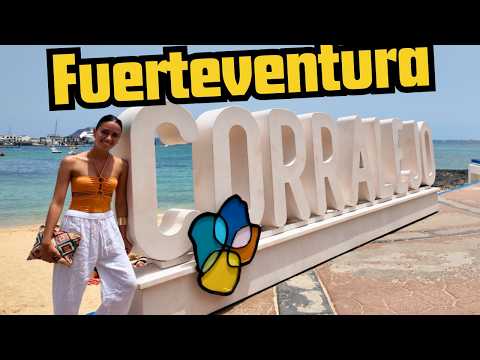
My First Time in Corralejo, Fuerteventura! You WON'T Believe the Vibe! 🤩
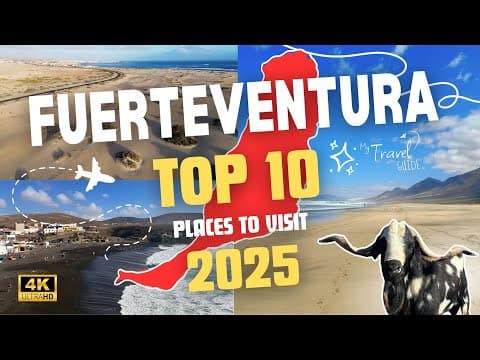
Top 10 Places to Visit in Fuerteventura 2025 | Best Things to Do & See | Travel Guide 4K
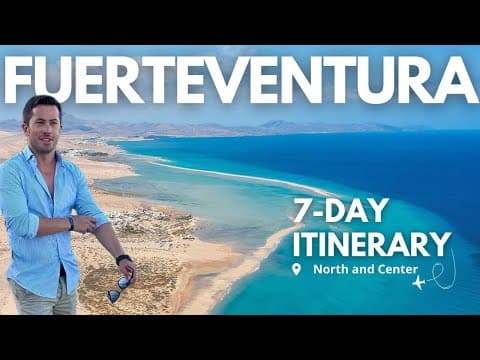
Fuerteventura 2025 Travel Guide: Best Beaches & Top Things to Do

Travel to Fuerteventura with EasyJet from Bristol Airport

A Day visit to Corralejo | Was I wrong about this place?

Christmas in Fuerteventura | R2 Pájara Beach Hotel & Spa