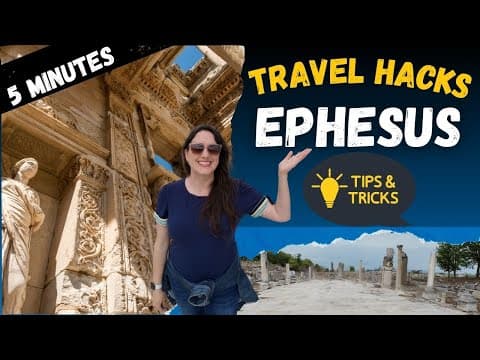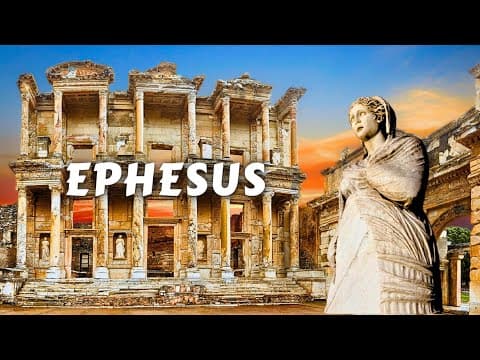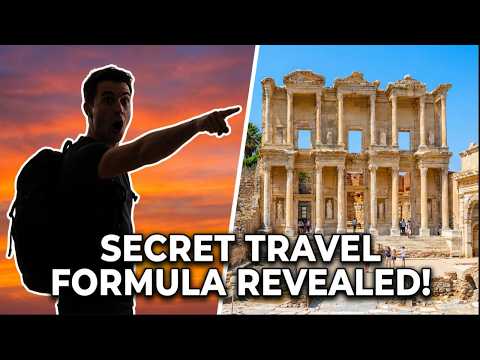

Ephesus (Efes) is one of the largest and best-preserved ancient cities in the world — the former capital of Roman Asia, a city of 250,000 inhabitants at its peak, whose marble-paved streets, colonnaded halls, public toilets, library facade and theatre provide the most vivid and immediate experience of everyday Roman urban life available anywhere in the Mediterranean. The site is extraordinary in its scale and preservation. Walking down the main Curetes Street from the Upper Gate toward the Library of Celsus (one of the most recognisable ancient facades in the world) and the Grand Theatre (seating 25,000), passing the Fountain of Trajan, the Temple of Hadrian, the terraced houses (closed mansions with exceptional floor mosaics and frescoes, requiring a separate entry ticket — worth every lira), the brothel and the marble public latrines, gives an overwhelming sense of how sophisticated Roman urban life was. Nearby, the House of the Virgin Mary (where Mary is believed to have lived her last years) is a Catholic pilgrimage site. The Temple of Artemis (one of the Seven Wonders of the Ancient World — of which only a single reconstructed column survives) is a poignant reminder of what is lost. The Ephesus Museum in nearby Selçuk houses the finest finds, including the extraordinary multi-breasted Artemis statue. Selçuk is an excellent base — from here, buses connect easily to the site, and the town has excellent accommodation and food. Visit in early morning to avoid tour groups and heat.
Plan your trip to Ephesus
Destination pre-filled — set your origin, dates and budget